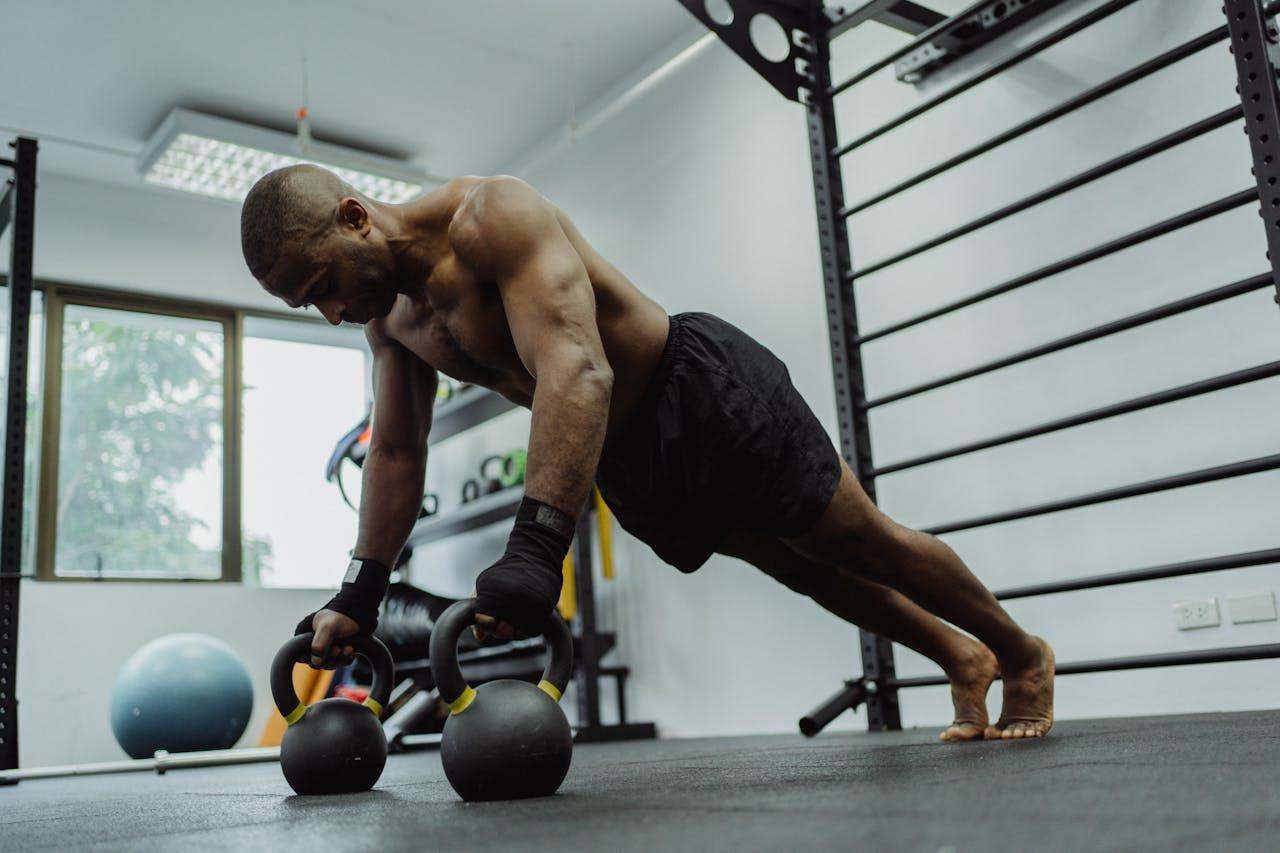
Kettlebells are one of the best pieces of equipment you can buy for a home setup. One bell, a small patch of floor, and you can train strength, conditioning, and mobility in the same 30-minute session.
The problem is that almost everyone overbuys. They walk into the decision picturing a wall of bells in graduated sizes, when what they actually need to get strong is two or three weights they’ll touch every week.
This guide walks through how many kettlebells a beginner really needs, how to pick the right weights, and which style (cast iron vs competition) makes sense for your training.
Start With How You’ll Actually Train
Before you spend a dollar, write down what your weekly kettlebell training will look like for the next three months.
If your honest answer is two 30-minute sessions of swings, goblet squats, presses, and carries, you do not need six bells. You need two, maybe three.
If your answer is “I want to learn the Turkish get-up, snatches, and complexes,” that’s a different conversation, and you’ll be reaching for matching pairs and a wider weight range.
The mistake new buyers make is buying for the workouts they imagine doing six months from now. Start with the program that fits the next month of your life.
How Many Bells Do You Really Need?
For most beginners, the answer is two.
One moderate bell for swings, deadlifts, goblet squats, and rows. One lighter bell for overhead pressing, the Turkish get-up, and learning new movements where lighter weight protects your shoulders.
That’s it. Those two bells cover swings, squats, hinges, rows, presses, carries, and most foundational kettlebell work.
Add a third bell only when you’ve outgrown the moderate one for hinge work, which usually means six to twelve weeks of consistent training. At that point, you’ll know exactly what weight to buy because you’ll have felt the previous one get easy.
Picking Weights Without Overthinking It
Generic weight charts are mostly useless because two people at the same bodyweight can have wildly different hinge strength.
A reasonable starting framework:
For a smaller-framed adult new to lifting: start with a 12 kg (26 lb) bell for swings and squats, and an 8 kg (18 lb) bell for presses.
For an average adult with some strength training history: 16 kg (35 lb) for swings and squats, 12 kg for presses.
For a stronger adult, especially with a deadlift or squat background: 20 kg (44 lb) for swings and lower-body work, 16 kg for presses.
Those are starting points, not prescriptions. If the lighter bell feels too easy on day one, you can usually progress to the moderate one within a few weeks for two-handed swings. The lighter bell still earns its place for single-arm presses and technique drills.
A useful rule: it’s better to buy a bell slightly too light than slightly too heavy. A light bell teaches you the movement. A heavy bell teaches you to compensate.
Cast Iron vs Competition: Which Style Fits Your Training
Once you’ve decided on bell count and weight progression, the next decision is style: cast iron or competition.
Cast iron bells have variable handle thickness and bell diameter; they get bigger as the weight goes up, which means your grip and clean rack position change as you progress.
Competition kettlebells stay the same size and handle thickness regardless of weight, which means technique transfers cleanly from a 12 kg to a 32 kg without re-learning the swing path. As Fitness Superstore explains in their kettlebell set buying guide, the choice often comes down to budget (cast iron is more affordable per kg) versus consistency in training feel (competition style is the standard for serious technique work).
For most home users doing swings, squats, and presses, cast iron is the practical pick. The size change between weights is real but manageable, and the price difference at each rung of the progression adds up fast.
If you’re drawn toward kettlebell sport, snatch ladders, or high-rep technical work where rack position matters, competition style is worth the premium.
The Mistake New Buyers Make
The biggest waste of money in home kettlebell setups is buying weights you’ll never touch.
People buy a 6-piece graduated set covering 8 kg through 28 kg because the bundle looks complete. They use three of them. The rest sit on the rack as decoration.
The training research is clear that kettlebell work is genuinely demanding even at modest weights. ACE Research on kettlebell training showed that a 20-minute kettlebell snatch protocol burned roughly 20 calories per minute, comparable to running a six-minute mile pace. You do not need a wall of bells to get serious metabolic and strength work done. You need two bells, a clear program, and enough sessions per week to actually progress.
Buy the bells you’ll train with weekly. Add to the rack based on what your body has earned, not what looks impressive.
Putting it together
A practical starter setup for a beginner is straightforward:
Two bells. One light, one moderate. Cast iron, unless you have specific reasons to go to the competition. Picked at weights you can actually control through clean reps, not weights that flatter your ego on a one-rep test.
Train twice a week for a month with that setup. The bell that’s getting easy will tell you what to buy next, and your form will tell you when you’re ready for it.